Symphony No. 9 “From the New World,” Movement II
Composer: Antonín Dvořák
Performance: Berliner Philharmoniker,
conducted by Ferenc Fricsay (1960)
Musical Characteristics: The Largo
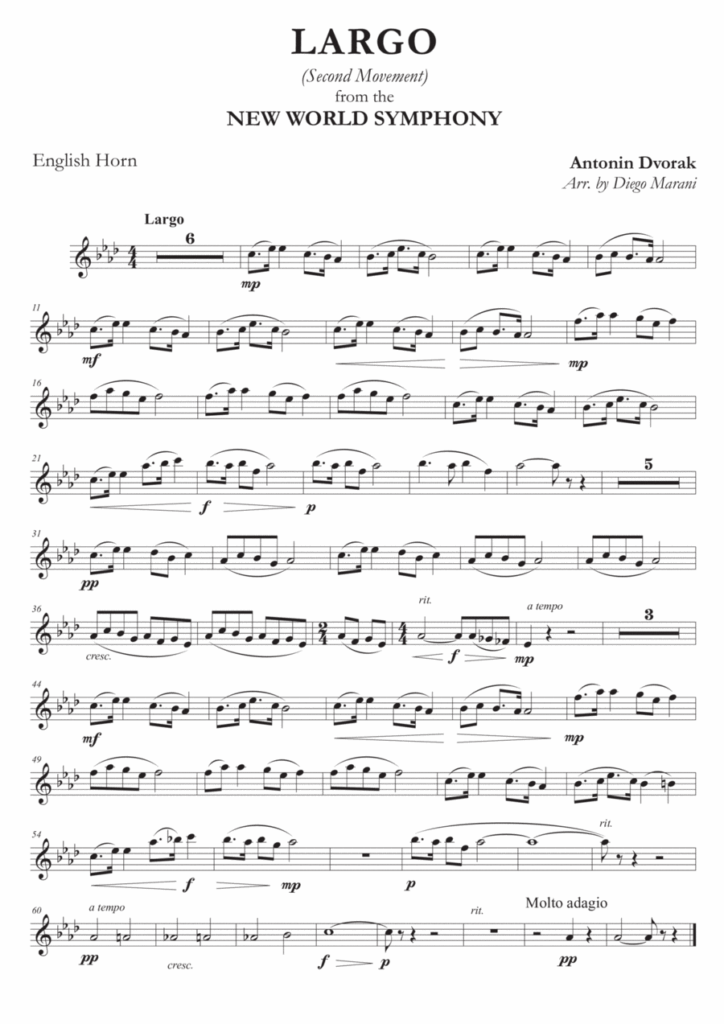
For this project, I am focusing on the second movement of Dvořák’s New World Symphony, which is the Largo movement. I chose this movement because it has the famous main melody, and it connects really well to the discussion of spiritual-inspired music and national identity. Overall, the movement sounds very slow, peaceful, and emotional. It begins with slow brass chords, and then the English horn introduces a melody that sounds almost like a song without words. Later, the middle section becomes darker and more unsettled, but near the end, the calm opening mood comes back again. This makes the whole movement feel complete and also very reflective.
-
Melody The main melody is first played by the English horn. The textbook describes this as a spiritual-inspired theme, but it is not an actual spiritual that Dvořák directly copied. The melody sounds lyrical and song-like, almost like someone is singing without words. This is one reason the movement feels so emotional and memorable. Range
(The distance between the highest and lowest pitches)The main melody does not feel like it has an extremely wide or flashy range. To me, it stays in a more comfortable-sounding space, which makes it feel vocal-like and personal rather than dramatic or showy. Shape
(The “contour” of movement of pitches)The melody rises and falls gently. It does not sound sharp or aggressive. The ending of the main theme rises upward, which makes the phrase feel complete and satisfying. Motion
(The size of most of the intervals)The melody mostly feels smooth and lyrical, with more conjunct motion than large disjunct leaps. Rhythm / Meter The rhythm feels broad and steady. Because the tempo is so slow, I do not hear it as dance-like or strongly accented. It feels more like the music is breathing slowly. Tempo
(How fast or slow the music is)The movement is marked Largo, which means very slow. This slow tempo is one of the biggest reasons the movement feels calm, serious, and reflective. Dynamics
(How loud or quiet the music is)The opening feels gentle and controlled, so the English horn melody can stand out clearly. The middle section becomes more intense and unsettled, so the movement does not stay peaceful the whole time. Timbre
(The unique quality of a sound)The English horn is the most noticeable sound at the beginning. Its lower, darker sound gives the melody a warm and slightly lonely feeling. Later, the oboe, strings, woodwinds, and brass add different colors, especially in the darker middle section. Texture The opening texture feels mostly like one clear melody with orchestral support underneath. The English horn carries the main tune, while the orchestra supports it with harmony. This makes the melody very easy to follow. Form The movement is in ternary form: an opening section, a contrasting middle section, and then a return of the opening section. This makes the movement feel rounded because the calm opening mood comes back after the darker middle section. Instruments This is an orchestral movement, so the main sound comes from a full symphony orchestra. The most important instrument in the opening is the English horn, an aerophone from the woodwind family, because it introduces the main Largo theme. The brass instruments, also aerophones, are important at the beginning because they play the slow sustained chords. Later, the strings, which are chordophones, and the woodwinds become more noticeable in the middle section. Voice / Text Setting There are no singers and no original lyrics because this is an instrumental symphony movement. However, the melody sounds so song-like that it was later given words in “Goin’ Home” in 1922, which is one reason people sometimes hear it as if it were originally a song.
Historical Background
For this section, I am talking about the background of the whole New World Symphony, not only the second movement. This is because the historical meaning of the piece comes from Dvořák’s larger time in the United States and the debate about what American concert music should sound like.
Who created the work?
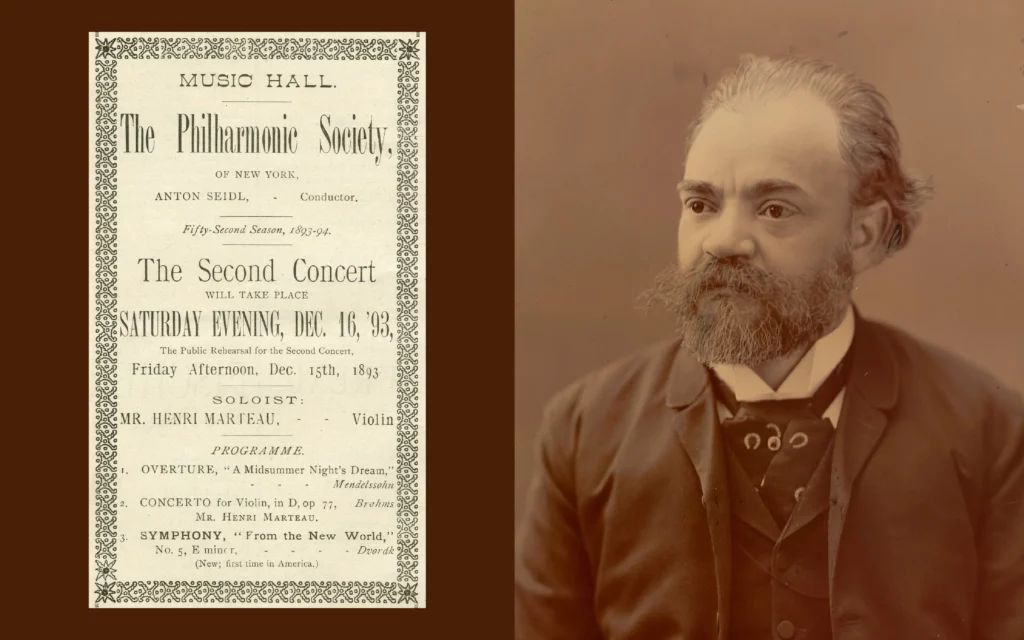
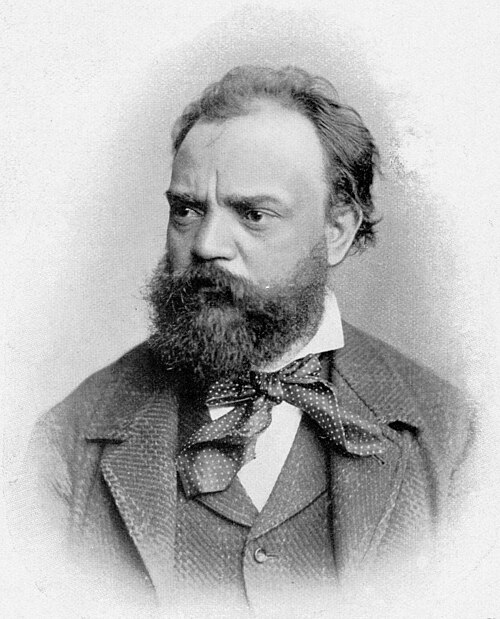
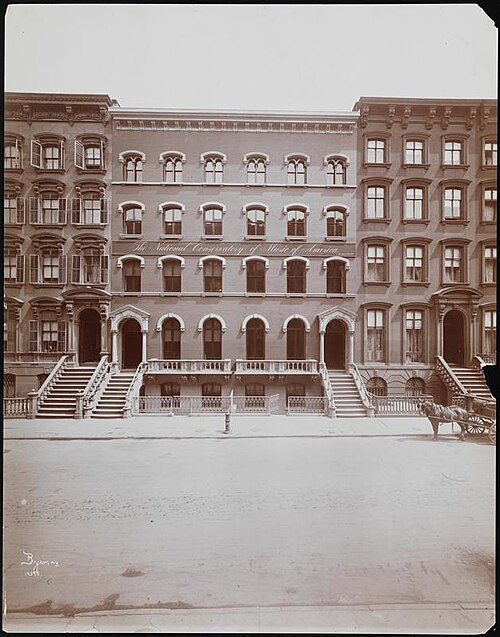
Symphony No. 9, “From the New World” was created by Antonín Dvořák, a Czech composer. When Dvořák came to New York City in 1891, he was already very successful. He was invited to serve as the first director of the National Conservatory of Music, which trained American musicians in the European concert tradition. The textbook also says that he was expected to contribute to the development of American concert music.
This is one reason the piece is so interesting to me. Dvořák was not American, but he was asked to help American composers think about what their own national style could sound like. So the symphony is not only a piece of orchestral music. It is also part of a larger conversation about American identity in music.
Image: National Conservatory of Music of America: https://en.wikipedia.org/wiki/National_Conservatory_of_Music_of_America
Who usually performs it, and who listens to it?
This work is usually performed by a full symphony orchestra with a conductor. This website gives an example performance by the Berliner Philharmoniker, conducted by Ferenc Fricsay, and the piece follows the standard four-movement pattern of a European symphony.
The typical audience would be people listening in a concert hall, students studying classical music, or listeners interested in orchestral music. However, the second movement became familiar to a wider audience because its main melody was later given words in the song “Goin’ Home.” Because of that, some people know the Largo melody almost like a song, even if they do not know the whole symphony.
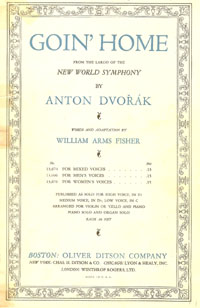
Image: The Song “Goin’ Home: https://www.americanmusicpreservation.com/GoinHome.htm
When and where was it written? What was happening at the time?
Dvořák wrote the symphony during his time in the United States, and it was premiered in 1893. The textbook says that during his stay in the United States, Dvořák produced two major “American” works that were both premiered in 1893: the American Quartet and Symphony No. 9, “From the New World.”
The historical context matters a lot. In the late nineteenth century, American composers and music institutions were trying to figure out what American concert music should become. European concert music was still treated as the main serious model, and the National Conservatory itself trained musicians in that European tradition. But Dvořák argued that American composers should look to folk traditions in the United States, especially African American spirituals and Native American music, if they wanted to create a national style.
This context clearly affected the symphony’s creation and meaning. Dvořák’s New World Symphony became an example of his idea of what could count as “American” in music. At the same time, his view was limited. The textbook points out that Dvořák actually knew very little about many American folk traditions, and that his ideas about Native American music were more fantasy than fact. So I think the piece is important not because it perfectly represents America, but because it shows how complicated the idea of national music can be.
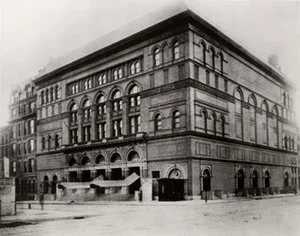
Image: Carnegie Hall, circa 1892: https://www.dvoraknyc.org/dvorak-in-america
What other context is important to know?
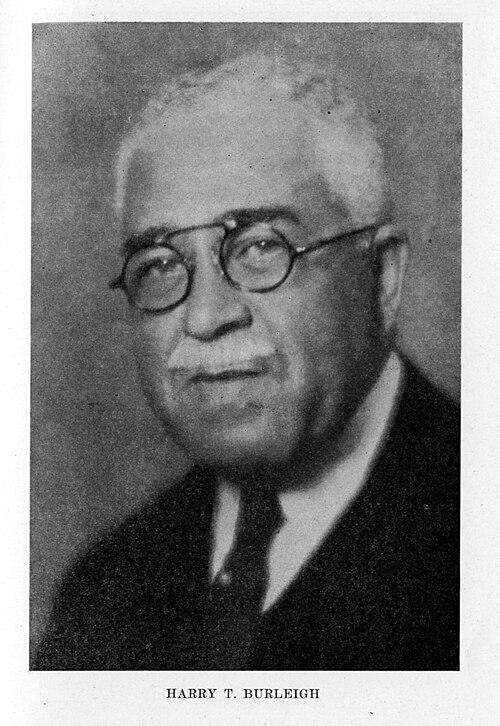
One important person in this story is Harry T. Burleigh, an African American singer and student at the National Conservatory. The textbook explains that Burleigh had learned spirituals from his grandfather, who had been born enslaved and later purchased his freedom. At Dvořák’s request, Burleigh often sang spirituals for him at home. This gave Dvořák direct exposure to African American spirituals.
This is important for my project because the second movement, “Largo,” has a spiritual-like theme. However, I want to be careful here because the Largo theme is not an actual spiritual that Dvořák copied. The textbook says that “Swing Low, Sweet Chariot” was connected to a theme in the first movement, while the second movement has a spiritual-like theme. Later, in 1922, a student of Dvořák’s added words to the second movement theme in the song “Goin’ Home,” and after that many people mistook it for a real spiritual.
Another important context is the symphony’s Native American connection. Dvořák connected the internal movements of the symphony to Longfellow’s The Song of Hiawatha, but the textbook says this connection is romanticized and inauthentic. It also says the symphony is an example of absolute music, so it should not be understood as telling one clear, specific story.
For me, this background makes the piece more meaningful. If I only listened to the music, I might just hear a beautiful slow symphony movement. But after learning the context, I hear it as part of a debate about what “American music” should sound like, whose musical traditions are valued, and who gets to represent a nation through music.
Image: Portrait of Harry T. Burleigh: https://en.wikipedia.org/wiki/Harry_Burleigh